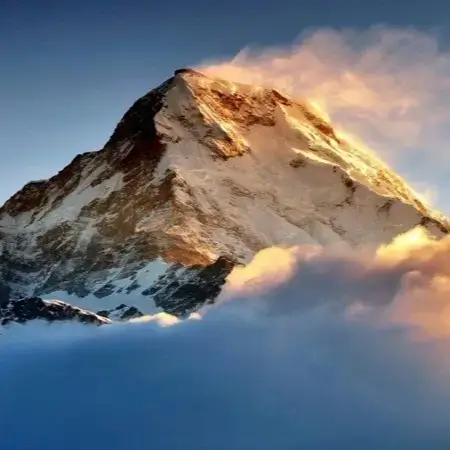


The Hillary Step on Mount Everest was once one of the most famous and difficult sections near the summit of the world’s highest mountain. Located on the Southeast Ridge, just below the summit, this steep rock section became famous after Sir Edmund Hillary and Tenzing Norgay crossed it during the first successful ascent of Everest on 29 May 1953.
For climbers approaching Everest from the Nepal side, the Hillary Step was more than just a rock section. It was a narrow, exposed and difficult section near the Everest summit, where climbers had to stay focused despite extreme altitude, freezing conditions, physical exhaustion and limited oxygen.
The Hillary Step became famous after Sir Edmund Hillary and Tenzing Norgay climbed this section during their historic first ascent of Mount Everest in 1953. Today, the Hillary Step is also known for another reason. After the 2015 Nepal earthquake, many climbers reported that the original rock feature had changed or collapsed. Because of this, the Hillary Step has become not only a famous climbing landmark but also a reminder of how mountains can change over time.
What is the Origin of the Name “Hillary Step”?
The Hillary Step got its name from Sir Edmund Hillary, the New Zealand climber who reached the summit of Mount Everest with Tenzing Norgay on 29 May 1953. During their historic climb, they reached a steep rock wall. This wall was about 12 meters high, almost the height of a four-storey building. Hillary found a narrow gap between the rock and the snow. He used that gap to climb up carefully. After Hillary climbed it, Tenzing followed him. Once they crossed this difficult section, they continued towards the summit of Mount Everest.
The name honours Hillary’s role in the first successful ascent of Mount Everest. It also reminds people of the courage, skill and determination needed to climb the world’s highest mountain.
Where Is the Hillary Step Located?
The Hillary Step is located on the Southeast Ridge of Mount Everest, between the South Summit and main summit. This part of the popular South col route, which is the normal climbing route used by many expeditions from the Nepal side.
It sits at approximately 8,790 meters (28,839 feet), just 60 meters below Everest.
The terrain was mixed: rock, snow, and ice, which requires technical skill and calm nerves. Many climbers considered it the most difficult section above 8,000 meters.
How High Is the Hillary Step?
The Hillary Step was difficult because of its position, exposure, altitude and traffic. Even though the rock step itself was around 12 meters high, climbers had to face it after hours of climbing in the death zone.
The route around the Hillary Step was also narrow. In busy climbing seasons, climbers sometimes had to wait in queues while others moved up or down the fixed ropes. Waiting in the death zones increases risk because the body continues to lose energy and oxygen.
Climbers are affected by low oxygen levels, freezing temperatures, strong winds, and mental fatigue. A short climb that may seem manageable at lower altitude becomes a serious challenge on Everest.
The Hillary Step was also exposed; a mistake could have serious consequences. Climbers needed to use fixed ropes, maintain careful foot placement, and stay focused to cross this section safely. Did Hillary Step Collapse After 2015 Earthquake
Does Hillary Step Still Exist Today?
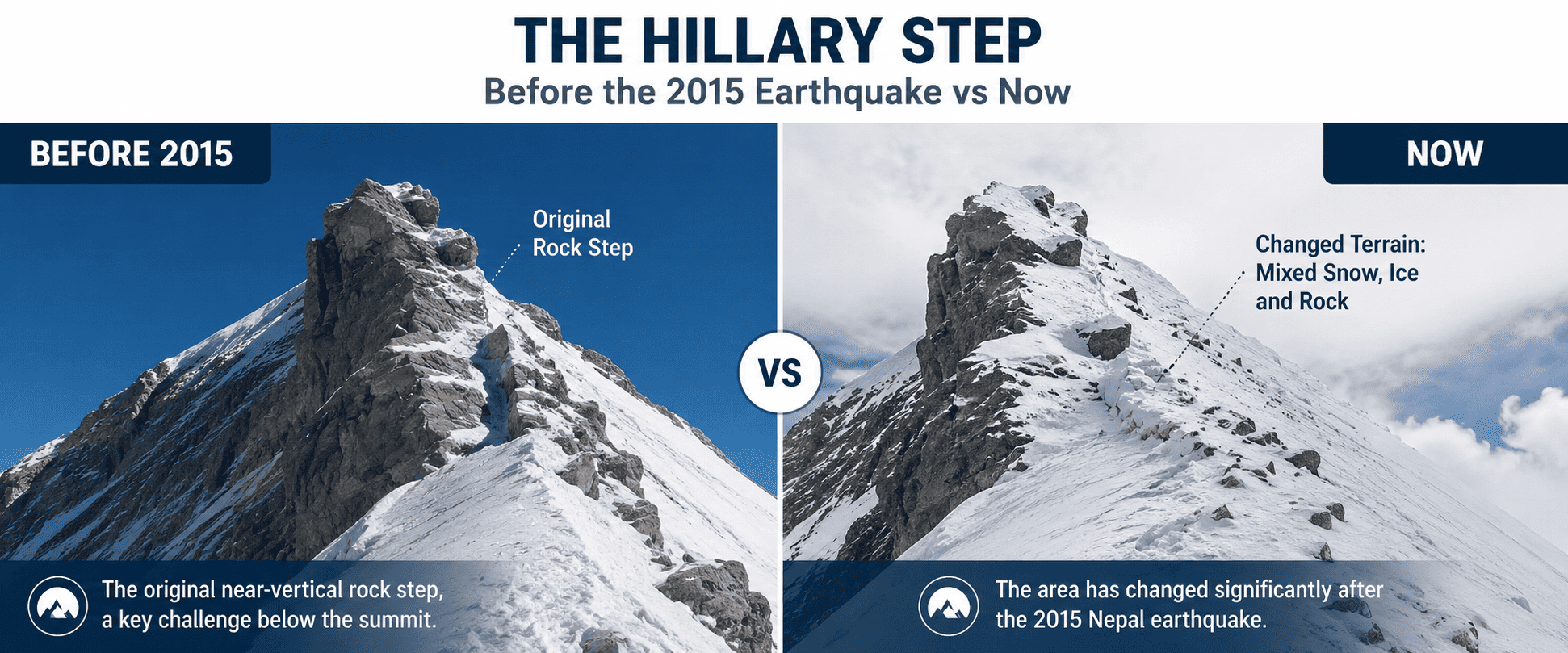
The original Hillary Step, as climbers knew it before the 2015 earthquake, is widely believed to have changed significantly. Many climbers now describe the area as different from the old near-vertical rock step. Today, the route near the summit still remains dangerous and demanding, but the exact feature known as the Hillary Step may no longer exist in its original form.
This does not make Everest easy. Climbers still face extreme altitude, narrow ridges, harsh weather, long summit pushes and serious safety risks. Even if the old rock step has changed, the final route to Everest remains one of the most challenging climbs in the world.
For trekkers, climbers and even readers, the Hillary Step remains important because of its history, symbolism and connection to the first successful climb.
Does 2015 Nepal’s Earthquake Affect Climbing Mount Everest?
In short, the answer is yes.
After the 2015 earthquake, many climbers reported that the Hillary Step had changed or collapsed. Instead of the old vertical rock wall, the area is now often described as a mixed section of snow, ice, rock and broken terrain.
For some climbers, the change may have made the route feel less like a short rock-climbing challenge. However, this does not mean climbing Everest has become easy. The change has also created uncertainty. Climbers and guides now have to depend more on current snow conditions, fixed ropes and route planning. In some years, the area may feel smoother to cross. In other years, loose rocks, deep snow or unstable sections may make it more difficult.
Hillary Step and Mount Everest Summit Route
The Hillary Step was part of the South Col route from Nepal, which is one of the most commonly used routes to climb Mount Everest.
Climbers approaching the summit from this side usually move from Camp 4 at the South Col overnight. They climb towards the Balcony, then continue to the South Summit. From there, they cross exposed ridges towards the Hillary Step area before making the final climb to the summit.
This section is one of the most serious parts of the climb. Climbers are already tired, oxygen is low, and the weather can change quickly. Any delay or mistake in this section can pose a danger.
Interesting Facts About The Hillary Step
- The Hillary Step was near the top of the world.
- It was only around 12 meters high.
- It was a major bottleneck.
- It was reportedly changed after the 2015 earthquake.
The Hillary Step was Near the Top of the World
The Hillary Step was located at around 8,790meters, very close to the summit; just 60 meters below Mount Everest. Its extreme altitude made it one of the most serious sections of the climb.
It was Only around 12 Meters High
Although the Hillary Step was only around 12 meters high, it was extremely difficult because of the altitude, exposure, cold and tiredness climbers faced near the summit.
Because of its difficulty, many climbers do not believe it is just 12 meters high.
It was a Major Bottleneck
During busy summit seasons, the Hillary Step could become a bottleneck. Climbers moving up and down the same narrow route sometimes had to wait, which increased risk in the death zone.
It was Reportedly Changed After the 2015 Earthquake
Many climbers reported that the Hillary Step changed or collapsed after the 2015 Nepal earthquake. Because of snow cover and changing conditions, the topic has remained debated.
Why Does the Hillary Step Still Matter?
The Hillary Step matters because it represents the history, difficulty and danger of climbing Mount Everest. It is connected with the first successful Everest ascent, the development of high-altitude mountaineering and the changing nature of the Himalayas.
For climbers, it was once a final test before the summit. For historians, it is linked to the story of Edmund Hillary and Tenzing Norgay. For travellers and climbers, it is one of the most interesting features on Mount Everest.
The story of the Hillary Step also shows that mountains are not fixed forever. Earthquakes, snow, ice, wind and climate conditions can change the shape of even the most famous places in the Himalayas.
Final Thoughts: The Legacy of Hillary Step
The Hillary Step was once one of the most famous and challenging features on Mount Everest’s Southeast Ridge. Located just below the summit, it tested climbers at extreme altitude and became a symbol of the final struggle before reaching the top of the world.
Named after Sir Edmund Hillary, the step holds a place in Everest history. It reminds us of the courage of early climbers, the difficulty of high-altitude mountaineering, and the power of the Himalayas.
Although the original Hillary Step is widely reported to have changed or collapsed after the 2015 Nepal earthquake, its name and story remain important. For anyone interested in Everest, trekking, climbing history, or Himalayan geography, the Hillary Step remains one of the most fascinating landmarks associated with Mount Everest.
If you are planning an Everest Base Camp Trek or Everest Region Trek, Hop Nepal can help you with trekking guidance, itinerary, planning, permits, flights, accommodation and complete travel.
FAQs
What is Hillary Step on Mount Everest?
The Hillary Step was a steep rock section located near the summit of Mount Everest on the Southeast Ridge route from Nepal. It was once one of the final difficult parts climbers had to cross before reaching the top of the world.
How Long Does it Take to Climb the Hillary Step Today?
There is no fixed time to climb the Hillary Step area today. The original feature is widely reported to have changed after the 2015 Nepal earthquake, so climbers do not experience it exactly as before. The time depends on weather, snow conditions, fixed ropes, climber experience and crowding near the summit.
What is the Height of Hillary Step?
The Hillary Step was around 12 meters, or about 39 to 40 feet, high. Although it was not very tall, it was extremely difficult because it was located near the summit at around 8,790meters, where oxygen is very low and climbers are already exhausted.
Why is Hillary Step Famous?
The Hillary Step is famous for being one of the final difficult sections before the summit of Mount Everest. It is also connected with Sir Edmund Hillary and Tenzing Norgay’s historic first successful ascent of Everest in 1953.
Was the Hillary Step Dangerous?
Yes, the Hillary Step was dangerous because it was located very high on Everest, near the summit. Climbers had to cross it while dealing with low oxygen levels, freezing temperatures, fatigue, strong winds, and a narrow, exposed route.
Why Was the Hillary Step Called "Bottleneck"?
The Hillary Step was narrow and difficult, so climbers often had to move slowly while using fixed ropes. During busy summit windows, climbers going up and down could create long queues near this section.